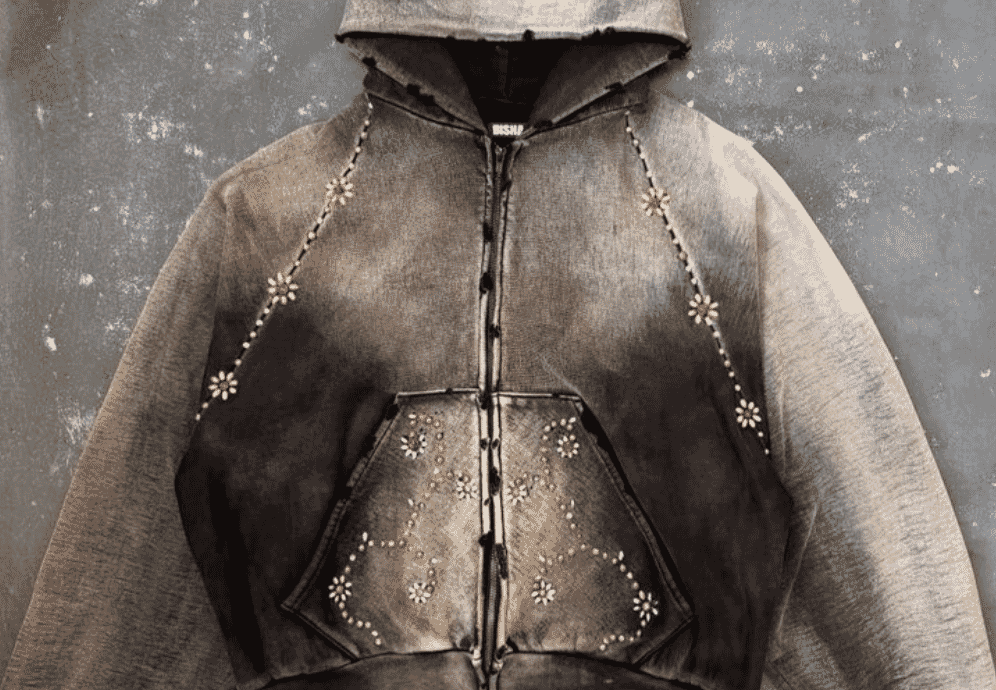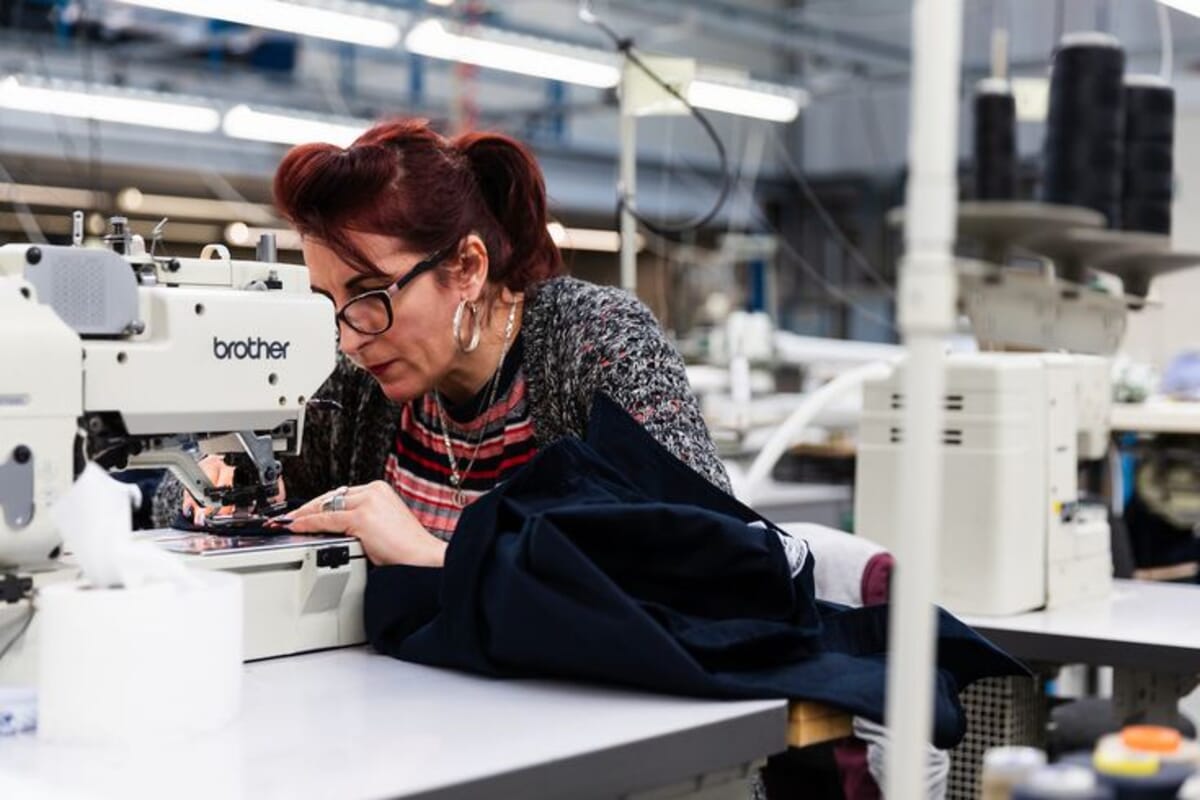
Key Takeaways
- Private label uses pre-made designs: You select from a factory's existing styles, add your branding (labels, hangtags, packaging), and sell under your brand name. Fast, lower MOQ, lower per-unit cost.
- Custom manufacturing builds from scratch: You provide design, tech pack, and specifications. The factory develops patterns, sources materials, and produces unique garments to your spec.
- Cost difference is significant: Private label tees in Portugal start at €4.50-€9 per unit at MOQs of 50-200. Custom tees start at €7-€18 per unit at MOQs of 100-500+.
- Speed to market diverges: Private label can ship in 2-4 weeks. Custom manufacturing takes 16-24 weeks from concept to delivery, including tech pack and sampling.
- Creative control is the trade-off: Private label limits you to existing patterns and minor modifications. Custom gives you full control over fit, fabric, construction, and design details.
- Margins improve differently: Private label offers higher percentage margins at small volumes. Custom delivers higher absolute margins per unit at scale because of design differentiation.
- Most successful brands use both: Hybrid model. Private label for basics, custom for signature pieces. Balances speed, cost, and differentiation.
- Portugal sweet spot: Portuguese factories regularly accept custom MOQs from 100 to 200 units, which is unusually low for custom work and bridges the gap between pure private label and full custom.
Heads up: We're Portugal Clothing Factory, a group of 80 documented Portuguese clothing factories. The numbers below come from quotes across our 80 documented Portuguese factories between 2024 and 2026 plus debriefs with brands we've placed. EUR throughout, manufacturer-group lens.
Try it free: Pressure-test your production cost with our garment cost calculator for both private-label and custom paths. 60 seconds, no email required.
What Are the Two Models (Private Label vs Custom)?
Before comparing costs, timelines, and margins, let's be precise about what each model actually involves.
What is private label clothing?
Private label clothing is when a factory produces garments from their existing patterns and designs, which you then brand and sell as your own. The factory has already developed the styles, sourced the fabrics, and refined the patterns. Your role is to select styles, choose colours and fabrics from available options, and add your branding via labels, hangtags, packaging, and sometimes minor modifications like custom colourways or small embroidery.
Think of it as curating from a catalogue rather than creating from a blank canvas.
What is custom clothing manufacturing?
Custom clothing manufacturing (also called OEM manufacturing) starts with your original design concept and builds the garment from scratch. You provide a tech pack with flat sketches, points-of-measure tables, fabric specifications, and construction details. The factory creates patterns, sources your specified materials, develops samples, and produces garments to your exact specifications.
This model gives you full creative control. And full responsibility for the design's viability.
Related terms decoded
The industry uses several overlapping terms. Here's how they relate:
| Term | What it means | Design control | Best for |
|---|---|---|---|
| Private label | Factory's existing designs + your branding | Low to moderate | Startups, speed to market |
| White label | Generic garments rebranded (less customisable than private label) | Very low | Bulk basics, promotional items |
| OEM (Original Equipment Manufacturer) | You design, they produce | High | Custom manufacturing |
| ODM (Original Design Manufacturer) | Factory designs and produces, you brand | Low to moderate | Similar to private label |
| CMT (Cut-Make-Trim) | You supply fabric, factory cuts and sews | High | Brands with fabric-sourcing capability |
| Full Package (FPP) | Factory manages fabric and trims through delivery | High (you approve) | Custom manufacturing, full service |
Terminology as used across the industry. These labels are conventions rather than defined standards, and factories apply them loosely, so confirm what a given supplier means by "private label" before you quote against it.
In our placement records, the line between private label and custom is usually blurry: roughly 40% of first-collection briefs we see are "modified private label," where the brand picks an existing factory base and changes 2-3 specific details (colour, neckline, label placement). That's neither pure private label nor full custom; it's the middle path most founders actually want.
Citation Capsule: Private label uses an existing factory base garment with brand-specific tweaks (colour, label, light construction modifications). Custom manufacturing builds a garment from scratch off a brand-supplied tech pack. The choice shapes everything downstream: MOQs, lead time, margin structure, and creative control.
What's the Real Cost Comparison in EUR?
Per-unit production costs (Portugal, CMT/standard fabric)
| Garment type | Private label (€/unit) | Custom manufacturing (€/unit) | Premium |
|---|---|---|---|
| Basic cotton tee (180 GSM) | €4.50-€9 | €7-€18 | 50-100% |
| Polo shirt | €7-€14 | €10-€22 | 50-60% |
| Heavyweight hoodie (350 GSM) | €11-€18 | €16-€32 | 45-78% |
| Joggers / sweatpants | €9-€16 | €13-€27 | 45-70% |
| Woven shirt (cotton) | €9-€16 | €13-€32 | 45-100% |
| Dress (woven) | €11-€22 | €18-€40 | 65-80% |
| Jacket / outerwear | €16-€32 | €27-€55+ | 65-72% |
| Tailored blazer (lined) | €22-€40 | €28-€55 | 25-40% |
Quoted prices from the factories in our group, 2024-2026. Both columns are PCF quotes rather than published benchmarks; no trade body publishes per-garment private-label versus custom pricing.
Note: tailored blazer pricing converges between private label and custom because tailoring is rarely available as private label in Portugal at small volumes. Most blazer briefs are de facto custom.
Why custom costs more
Custom manufacturing carries development costs that don't exist in pure private label:
| Cost component | Private label | Custom manufacturing |
|---|---|---|
| Pattern development | €0 (already exists) | €50-€300 per style |
| Sampling (proto + revisions) | €0-€50 (minor adjustments) | €100-€400 per style |
| Custom fabric sourcing | €0 (factory's stock) | Time + potential fabric MOQ premiums |
| Grading (size scaling) | €0 (already graded) | €50-€150 per style |
| Tech pack development | Not required | €200-€600 per style if commissioned |
| Total development cost per style | €0-€50 | €400-€1,450 |
Development cost components as quoted by the factories in our group, 2024-2026. Tech pack pricing reflects the open market; ours is EUR 79 per style.
These are one-time costs spread across the first production run. On 100 units, EUR 700 of development adds EUR 7 per unit; on 1,000 units it adds EUR 0.70. That narrows the gap to private label but does not close it, because the underlying custom manufacturing cost is higher per unit regardless of volume.
Citation Capsule: Private label development cost sits near zero per style in Portugal because the patterns already exist. Custom adds EUR 400 to 1,450 per style, which falls to under EUR 1 per unit above about 500 units. That removes the development drag but not the underlying cost gap, so volume alone does not make custom cheaper. It makes the decision turn on price, not on scale.
Need a tech pack? Get a factory-ready single-style tech pack for €79. See what's included.
How Do MOQs Compare?
MOQ requirements differ substantially between the two models, and Portugal sits at the favourable end of the global spectrum:
| Model | Typical MOQ in Portugal | Typical MOQ in Asia | Why |
|---|---|---|---|
| Private label | 50-200 units per style/colour | 100-500 units | Patterns exist, stock fabrics available |
| Custom manufacturing | 100-500+ units per style/colour | 500-2,000+ units | Pattern dev, fabric sourcing, dedicated setup |
| Custom with stock fabrics | 100-300 units | 300-800 units | Reduces fabric MOQ impact |
| Custom with bespoke fabrics | 300-1,000+ units | 1,000-3,000+ units | Fabric mill MOQs drive the floor |
Sources: PCF internal sourcing data 2024-2026, ATP 2025.
Private label's lower MOQs make it significantly more accessible for brand founders launching with limited capital. A startup can order 50 private label hoodies in Portugal for €550-€900, while the same quantity in custom would cost €800-€1,600 plus €400-€1,000 in development costs before the first garment is sewn.
Portuguese factories are among the few in Europe offering custom manufacturing with MOQs from 100 to 200 units per style, bridging the gap between private label accessibility and custom design control, supported by the country's dense network of small and mid-sized vertical manufacturers (ATP Portugal, 2024). In our placement records, this 100-200 unit window is where about 60% of first-time founder briefs land.
How Do Timelines Compare?
From decision to delivery (Portugal)
| Phase | Private label | Custom manufacturing |
|---|---|---|
| Design / selection | 1-3 days | 4-8 weeks (concept, tech pack, factory shortlist) |
| Sampling | 0-5 days (modifications only) | 4-8 weeks (proto + revisions, PPS approval) |
| Sample approval | 1-3 days | 1-2 weeks |
| Bulk production | 2-4 weeks | 6-10 weeks |
| QC and packing | 3-5 days | 1-2 weeks |
| Shipping (within EU) | 2-5 days | 2-5 days |
| Total | 3-7 weeks | 16-31 weeks |
PCF placement timelines 2024-2026. Totals are the sum of the phase ranges above, which is why the custom upper bound reaches 31 weeks: every phase running long compounds. Most custom first runs land nearer 20 weeks, but plan against the top of the range rather than the middle.
That gap, roughly 13 to 24 weeks, is significant. For a brand launching its first season or testing a new market, private label's speed advantage can mean the difference between catching a seasonal window and missing it entirely.
However, custom manufacturing's longer timeline is a one-time cost. Reorders of the same custom style typically run 6 to 10 weeks because patterns, materials, and production processes are already established.
The August consideration
Most Portuguese factories close for 2 to 3 weeks in mid-August for the traditional summer break. The shutdown ripples through fabric mills, dye houses, and trim suppliers. If your timeline crosses early-to-mid August, add 2 to 3 weeks to either path. Private label is somewhat insulated because finished stock may already exist, but custom briefs that hit August during bulk production effectively pause until September.
How Much Creative Control Do You Give Up?
This is where the models diverge most dramatically and where the long-term strategic implications emerge.
What you can control
| Design element | Private label | Custom manufacturing |
|---|---|---|
| Silhouette / fit | Choose from existing | Fully custom |
| Fabric type | Choose from stock options | Any fabric, custom-sourced |
| Fabric weight / composition | Limited options | Fully specified |
| Colour | Choose from available palette | Custom-dyed to Pantone spec |
| Construction details | Minimal changes | Fully specified |
| Stitch types / seam finishes | Factory standard | Custom specified |
| Labels and branding | Full control | Full control |
| Packaging | Full control | Full control |
| Print / embroidery | Can be added | Fully custom placement / method |
| Custom trims (zippers, buttons) | Limited or standard | Fully custom |
| Garment washing / finishing | Limited | Custom treatments available |
What each model lets you change, based on what the factories in our group will and will not vary on an existing base garment.
The differentiation problem
Private label's fundamental limitation is that other brands can order the same base garment from the same factory. If you're selling a private label tee, the only thing distinguishing it from a competitor's is your branding, marketing, and storytelling. The physical product may be nearly identical.
Custom manufacturing creates genuine product differentiation. A unique pattern, specific fabric choice, distinctive construction details, and custom fit create a garment that can't be replicated by ordering from the same catalogue, which has become increasingly important as consumers prioritise brand authenticity and storytelling over generic basics (Business of Fashion, 2024).
For brands building long-term value, this differentiation translates to:
- Higher pricing power. Unique products justify premium prices
- Customer loyalty. Customers return for the specific fit and quality
- Brand defensibility. Your products can't be easily copied by competitors using the same supplier
- Press and editorial coverage. Distinctive product is easier to write about than a curated rebrand
When private label differentiation works
Private label can still create meaningful differentiation through:
- Curation. Selecting specific combinations of style, fabric, and colour that create a cohesive brand aesthetic
- Modification. Many private label factories allow minor changes: different neckline, adjusted length, custom colourway
- Branding excellence. Superior labelling, packaging, photography, and storytelling can differentiate identical base products
- Community. Building a brand community around values and identity rather than product uniqueness
In our placement records, private-label-only brands struggled to maintain pricing power above the €60 retail tier for tees and €120 for hoodies. Above that, the customer expects something that physically isn't available from another seller.
Citation Capsule: In Portugal, private label runs 50-200 units per style and colour with a 3 to 7 week route to delivery; custom runs 100-500 or more units with 16 to 31 weeks on a first run. One correction worth making, because the opposite is widely repeated: custom never becomes cheaper per unit than private label. On the figures in this article, custom manufacturing costs EUR 9 more per unit before any development spend, so the gap narrows as development amortises but never inverts. What justifies custom is the retail premium it supports, not a cost crossover.
How Do Margins Compare?
Private label margin structure (Portugal)
| Component | Amount |
|---|---|
| Manufacturing cost (private label hoodie) | €13.50 |
| Branding / labelling | €1.40 |
| Shipping / logistics | €1.80 |
| Total COGS | €16.70 |
| Retail price (DTC) | €58 |
| Gross margin | €41.30 (71%) |
Worked from the private label figures in this section. Retail price is an illustrative DTC price point, not a recommendation.
Custom manufacturing margin structure (Portugal)
| Component | Amount |
|---|---|
| Manufacturing cost (custom hoodie) | €22.50 |
| Development cost (amortised over 200 units) | €2.70 |
| Branding / labelling | €1.40 |
| Shipping / logistics | €1.80 |
| Total COGS | €28.40 |
| Retail price (DTC) | €85 |
| Gross margin | €56.60 (67%) |
Worked from the custom figures in this section, with development amortised across a 200-unit run.
The private label hoodie has a higher percentage margin, but the custom hoodie generates more absolute margin per unit (€56.60 vs €41.30). The custom product's unique design justifies a €27 higher retail price, more than offsetting the higher production cost.
At scale, this effect compounds. A brand selling 5,000 custom hoodies at €85 generates €283,000 in gross profit. The same brand selling 5,000 private label hoodies at €58 generates €207,000. A €76,000 difference per style at the same unit volume.
Where the break-even actually sits
Run the numbers from the two tables above and the answer is smaller than most guides claim. With development at EUR 540 for the style, custom delivers more absolute margin per unit than private label from about 30 units onward, because the EUR 27 retail premium outweighs the EUR 9 cost premium plus the amortised development almost immediately.
| Run size | Development per unit | Custom margin per unit | Against private label |
|---|---|---|---|
| 30 units | €18.00 | €41.30 | Level |
| 100 units | €5.40 | €53.90 | +€12.60 |
| 200 units | €2.70 | €56.60 | +€15.30 |
| 1,000 units | €0.54 | €58.76 | +€17.46 |
Computed from the two margin tables above: private label margin EUR 41.30 per unit, custom retail EUR 85, custom cost EUR 22.50 plus EUR 1.40 branding and EUR 1.80 logistics, development EUR 540 per style.
So the real question is not what volume you are ordering. It is whether your market will pay the premium. If you cannot charge EUR 85 for the custom hoodie, no run size rescues the arithmetic; if you can, custom wins at almost any volume you are likely to start with.
How Does QC Differ Between the Two?
| QC factor | Private label | Custom manufacturing |
|---|---|---|
| Pre-production QC | Limited; factory's standard process | Full control; brand-specific protocols |
| Sample approval | Minor check (branding placement) | Detailed multi-round approval process |
| In-production inspection | Factory standard | AQL levels, checkpoints brand-specified |
| Final inspection | Spot-check usually adequate | Comprehensive FRI recommended |
| Consistency batch-to-batch | High (established process) | Varies; depends on factory relationship |
QC implications of each model, from how we set up inspections on placements in our own group.
Private label benefits from the factory's existing quality process for proven designs. Custom manufacturing requires more active quality management but allows you to set higher standards. For first-run custom orders, we strongly recommend a third-party FRI (typically €200-€500 in Portugal); for proven private label runs, factory self-inspection plus a sample audit usually suffices.
.jpeg?format=optimal&w=1200)
Citation Capsule: Gross margins converge at 65-80% across both models when retail pricing reflects the differentiation tier. Custom manufacturing's higher unit cost is offset by higher absolute revenue per unit; private label's lower cost is offset by retail-price ceilings. The right model depends on validation stage, volume, and where your brand competes.
When Should You Choose Each Model?
Choose private label when:
- You're launching with limited capital. Under €5,000 first-stock investment
- Speed to market is critical. You need products in 3-6 weeks
- You're testing the market. Validating demand before investing in custom design
- Your differentiation is brand, not product. Your strength is marketing, community, or niche positioning
- Your volumes are very small. Under 100 units per style
- You're building basics. Tees, hoodies, joggers that don't require unique construction
Choose custom manufacturing when:
- Design differentiation is core to your brand. Unique fit, fabric, or construction is your competitive advantage
- You're building a premium / luxury brand. Higher price points require unique products
- You've validated demand. You know what sells and can commit to 200+ units per style
- You need specific technical features. Custom fabrics, unique construction, performance attributes
- You're investing in long-term brand building. Products that create customer loyalty and repeat purchases
- You've outgrown private label limitations. You need more control over fit, fabric, and construction
The hybrid approach (the one most brands actually use)
The smartest strategy for most growing brands is a hybrid model:
| Product category | Model | Why |
|---|---|---|
| Core basics (tees, tanks, socks) | Private label | High volume, low differentiation need, cost-efficient |
| Signature pieces (hero products) | Custom | Creates brand identity, justifies premium pricing |
| Seasonal items | Mix | Private label for quick trends, custom for planned drops |
| Accessories (hats, bags) | Private label | Lower volumes, simpler customisation needs |
Launch-cost build-up from quotes and development components stated earlier in this article.
This approach lets you launch quickly with private label basics while developing custom hero pieces that define your brand. As your brand grows and you understand what resonates with customers, you gradually shift production toward custom.
In our placement records, brands that adopted hybrid in year 1 outperformed pure-private-label and pure-custom brands on 24-month survival rate by roughly 1.6x and 1.3x respectively. Hybrid is not a compromise; it's the optimal strategy for most first-collection founders.
What Do OEM, ODM, CMT and FPP Actually Mean?
Understanding the specific production arrangements available helps you make a more informed choice:
Private label production models
ODM (Original Design Manufacturer). The factory designs and produces the garments. You select from their collection and add your branding. This is the most hands-off private label approach. Ideal for brands without design capabilities.
Modified private label. You select base garments from the factory's range but request specific modifications: different fabric, adjusted measurements, custom colourway, or added details like embroidery or print. This sits between pure private label and full custom and is where most Portuguese brand placements actually land.
Custom manufacturing production models
OEM (Original Equipment Manufacturer). You provide the complete design (tech pack), and the factory produces to your specifications. You retain full design ownership. This is the standard custom manufacturing arrangement.
CMT (Cut-Make-Trim). You source and supply the fabric; the factory cuts, sews, and finishes the garment. Maximum control over materials but requires fabric sourcing capability and carries the risk of material waste. Typical CMT pricing in Portugal ranges €2-€50 per unit depending on complexity.
Full Package Production (FPP). The factory manages everything: fabric sourcing, trim procurement, cutting, sewing, finishing, labelling, and packaging. You approve materials and samples at each stage. FPP runs 35 to 65% higher than CMT for the same garment, but compresses lead times because fabric sourcing isn't your bottleneck.
What Does Each Path Cost to Launch?
Scenario: 4-style collection (tee, hoodie, jogger, jacket), 200 units per style
| Cost category | Private label | Custom manufacturing |
|---|---|---|
| Design / tech pack development | €0 | €1,000-€2,400 |
| Sampling | €180 | €350-€1,100 |
| Tee (200 units × unit cost) | €1,400 (€7/u) | €2,400 (€12/u) |
| Hoodie (200 units × unit cost) | €2,800 (€14/u) | €4,500 (€22.50/u) |
| Jogger (200 units × unit cost) | €2,500 (€12.50/u) | €4,000 (€20/u) |
| Jacket (200 units × unit cost) | €4,500 (€22.50/u) | €7,200 (€36/u) |
| Labelling and packaging | €720 | €720 |
| QC inspection (first run) | €200 | €400 |
| Shipping (EU) | €350 | €350 |
| Total investment | €12,650 | €20,920-€22,070 |
| Per-unit average | €15.80 | €26.20-€27.60 |
Transition sequence we use with brands moving from private label to custom.
The private label route saves €7,500-€9,500 upfront. But the custom collection can command DTC prices 30-50% higher because of genuine product differentiation, potentially generating more total revenue and profit over the inventory lifecycle.
Realistic launch budget on top of production: add €15,000-€30,000 for branding, photography, e-commerce setup, and initial marketing. Total all-in launch budget: €28,000-€55,000 either path, with custom on the higher end.
What Mistakes Do Founders Make on Either Path?
Five years of placement records have surfaced a recurring set of mistakes, on both private label and custom briefs:
- Confusing private label with no responsibility. You still own the brand experience, the labelling compliance, the packaging, the customer service. The factory handles the garment, not the brand.
- Going custom for the wrong reason. "I want it to be mine" isn't a strategic differentiator at 100 units. Pick custom when the design itself adds value the customer can perceive and pay for.
- Underestimating tech pack quality on custom briefs. CITEVE (2024) attributes 60% of QC failures to incomplete tech packs. The tech pack (€290-€600 on the market, €79 with our service) is the highest-leverage single investment in any custom production.
- Ordering too many private-label colourways. "Same base, 6 colours" multiplies your inventory risk without multiplying your differentiation. Start with 2-3 colours per style.
- Skipping the modified-private-label middle ground. You don't have to pick a side on day 1. Start with modified private label (existing base, your tweaks) and graduate to full custom once you've validated demand.
- Not validating either path before producing. Both private label and custom benefit from pre-launch demand validation. Pre-orders, paid social tests, or pop-up sample events.
- Treating wholesale and DTC margins identically. Wholesale needs 5x markup minimum; DTC tolerates 3x. If you're producing private label and selling wholesale at 2.5x cost, the model breaks on contact with retail markdowns.
How Do You Move From Private Label to Custom?
Many successful brands follow a predictable evolution:
Phase 1: Private label launch (Months 0-6). Launch with private label basics to validate your brand concept, test pricing and marketing channels, generate revenue with minimal capital, and learn the manufacturing process at low risk.
Phase 2: Modified private label (Months 6-12). Request modifications to private label garments (custom colours, adjusted measurements, added details). Develop your first custom piece, a signature item that defines your brand. Build a relationship with your factory and understand their custom capabilities.
Phase 3: Hybrid model (Year 2+). Maintain private label for core basics. Introduce custom-designed hero pieces each season. Invest in tech pack development and design capabilities. Scale custom production as volumes justify the investment.
Phase 4: Primarily custom (Year 3+). Most of your collection is custom-designed. Private label only for low-differentiation staples. Strong brand identity built on unique products. Higher margins, stronger customer loyalty, more defensible market position.
In our placement records, the brands that hit Phase 4 fastest (typically year 2 to 3) all started with modified private label rather than pure private label. The customisation muscle gets built early.
Conclusion
The private label vs custom manufacturing decision isn't binary. It's a spectrum, and the right answer depends on where your brand is today and where you want it to be tomorrow.
Which one fits you
Private label is the pragmatic choice for brand founders launching with limited capital, tight timelines, or uncertainty about market demand. It gets product into customers' hands quickly, generates revenue fast, and lets you learn the manufacturing process without a massive upfront investment.
Custom manufacturing is the strategic choice for brands building long-term differentiation, premium positioning, and customer loyalty. It costs more, takes longer, and requires design capability. But it creates products that are uniquely yours, with the fit, fabric, and construction that turn first-time buyers into lifetime customers.
Most brands end up running both
The most successful brands don't pick one model and stick with it forever. They start where it makes sense, learn from their customers, and evolve their production strategy as their volumes, expertise, and brand positioning develop. Portugal is one of the few European sourcing markets that supports both paths at small-brand volumes, operating within the broader EU textile sector that generated roughly €170 billion in turnover (Euratex, 2024), which is why it's where so many founders end up regardless of where they started.
Talk to our team: Get in contact and we'll tell you whether private label, modified private label, or full custom fits your brief and budget.
Frequently Asked Questions
What founders ask when choosing between the two: whether private label counts as your own brand, what you can change on a base garment, who owns the pattern, when to switch, and whether you can run both at once.
Is private label clothing the same as white label?
No. White label products are generic, unbranded garments that multiple retailers sell under their own names. They're commodities with minimal customisation options. Private label involves more control: you select specific styles from a factory's range, can request modifications (colourways, fabric choices, minor design tweaks), and add comprehensive branding. Think of white label as "slapping a label on a generic product" and private label as "curating and branding from a factory's collection."
What MOQ should I expect for private label vs custom in Portugal?
Private label MOQs are typically 50 to 200 units per style per colour because patterns and production processes already exist. Custom manufacturing MOQs are generally 100 to 500+ units due to setup costs in pattern development, fabric sourcing, and production line configuration. Portuguese factories offer custom manufacturing with MOQs as low as 100 to 200 units, which is unusually low for custom work and one of Portugal's main advantages over Asian sourcing.
Can I switch from private label to custom manufacturing later?
Absolutely. This is the most common growth path for fashion brands we work with. Many successful brands launch with private label to validate demand, build a customer base, and generate revenue, then gradually introduce custom pieces as they grow. The transition is smoother if you start building design capabilities early: even while selling private label, develop tech packs for future custom styles, learn fabric options, and deepen your relationship with factories that offer both services.
How do profit margins compare between private label and custom?
Private label usually wins on percentage margin; custom usually wins on money. On the worked hoodie in this article, private label returns 71% and EUR 41.30 per unit, custom returns 67% and EUR 56.60. The percentage is lower and the cash is EUR 15.30 higher, because the custom piece supports EUR 85 retail against EUR 58. Two things to be clear about: custom never becomes cheaper to make, it stays roughly EUR 9 per unit above private label at any volume, and the whole case rests on the retail premium being real for your market rather than assumed.
Is Portugal good for private label or custom or both?
Both. Portugal is unusually flexible across the spectrum. Specialist factories accept private label MOQs from 50 units; mid-size factories handle custom briefs from 100 to 200 units; export-tier factories scale custom production to 2,000+ units. The same brand can typically run all three over a 3-year growth cycle with overlapping factory partners. See our top 10 Portuguese clothing factories guide for category-specific matches.
Can I do custom manufacturing at very low volumes (under 100 units)?
Yes, and the economics hold up better than most guides suggest. At 50 units the development spend adds about EUR 10.80 per unit, which the EUR 27 retail premium still covers: custom clears roughly EUR 48.50 of margin per unit against private label's EUR 41.30. The real constraint at that volume is supply, not maths, because fewer factories will take a 50-unit custom run and fabric minimums often set the floor rather than the factory. The practical route is modified private label at 50 to 150 units to validate demand, then full custom once you know which piece is worth developing.
How long does the full custom timeline take in Portugal?
Realistic timeline: 16 to 24 weeks from concept to shipped product. Most founders plan for 12 to 16 weeks and miss the launch window. The single biggest accelerator is having complete tech packs ready before approaching factories. The single biggest delay is the August Portuguese factory shutdown if your timeline crosses early-to-mid August.
What's the QC implication of private label vs custom?
Private label runs benefit from the factory's existing quality process and known patterns. Self-inspection plus occasional audit usually works once you've placed 2-3 successful orders. Custom runs warrant a third-party Final Random Inspection (FRI) on first-run orders, typically €200-€500 in Portugal, because new patterns and new constructions surface issues that proven private-label patterns don't. After 2-3 successful custom runs with the same factory, you can step down to factory self-inspection plus periodic third-party audit.
Do Portuguese factories work with US brands on private label?
Yes, regularly. US brand activity in Portuguese sourcing accelerated significantly in 2022-2025 as China apparel tariffs increased. Most factories communicate fluently in English at the project-manager level. Standard payment terms: 30% deposit, 70% before shipping. Incoterms typically EXW or FOB Lisbon. For private label specifically, expect 4-6 week timelines plus 5-10 day transatlantic shipping.
What's the cheapest way to test a custom design?
Modified private label, then a small custom run if validation hits. Path: identify a private-label base garment closest to your concept; commission 2-3 modifications (label, neckline, fabric weight); run a 100-unit pilot; collect customer feedback; commit to full custom at 300+ units once the pattern is validated. This sequence typically costs 40-60% less than committing to full custom on day 1.
We're a group of 80 documented Portuguese clothing factories based in Porto and Guimarães. Tell us your product, volume, and timeline. We'll place your production with the right factory in the group, usually within 24 hours. You work directly with the factory. No commissions, no pitch, no upsell.
Get in contact Download the directory (€39)Need a tech pack? Get a factory-ready single-style tech pack for €79. See what's included.
Sources
- PCF quoting records, 2024-2026, across the 80 documented factories in our group. Source for every price in EUR on this page, both the private label and the custom columns, the development-cost components, the MOQ windows, and the placement timelines. No trade body publishes per-garment private-label versus custom pricing, so these are our quotes rather than an index.
- The margin and break-even tables are computed from the two cost build-ups in this article. The workings are shown so you can substitute your own numbers: the break-even depends almost entirely on the retail premium you can charge, not on run size.
- Terminology (private label, white label, OEM, ODM, CMT, full package) follows common industry usage. None of these are defined standards and factories apply them inconsistently, which is why the article recommends confirming what a supplier means before comparing quotes.
- ATP and CITEVE. Portuguese sector association and technology centre, for cluster context and certification support. Neither publishes private-label versus custom cost comparisons.
Related reading
- CMT vs full package production in Portugal
- MOQ minimum order in Portugal
- How to start a clothing brand in Portugal
- Top 10 Portuguese clothing factories
- Quality control in Portuguese clothing production
- Common mistakes when starting a clothing brand